 Ephemeris of the Mind
 (Book Review) The Mom Test: How to Talk to Customers & Learn If Your Business Is a Good Idea When Everyone Is Lying to You
Time to read: 3 min read
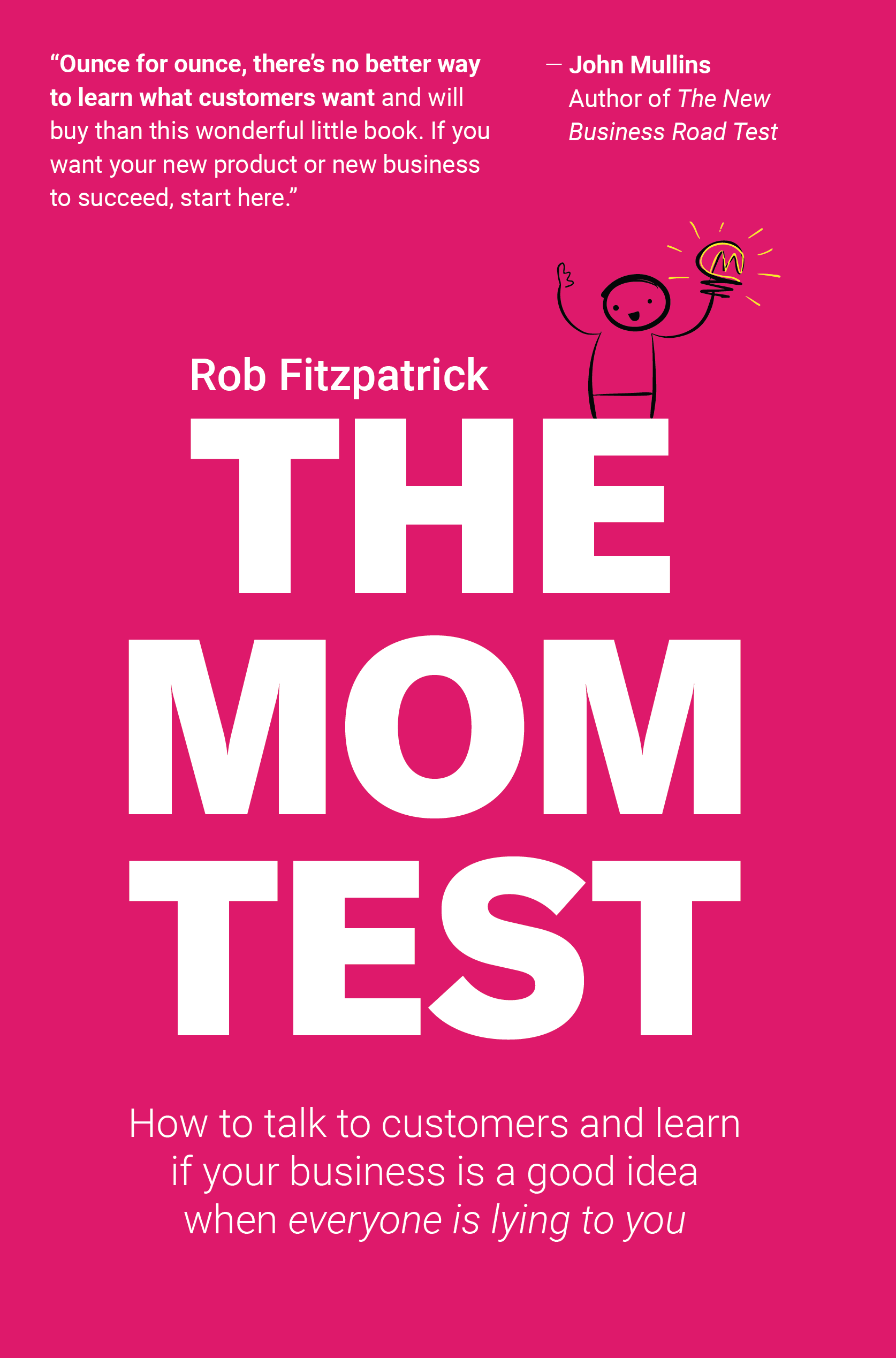 Book Cover
Questions are our tools. But we must learn to wield them. It's delicate work. And well worth learning.
Review
This seminal book explores how to validate ideas with potential customers. It covers not only the theory but also tactical techniques to help ask the right questions and also read between the line from responses during discovery conversations.
When Adam and I first attended Y Combinator, our initial idea seemed promising. It was a problem Adam had to solve in his previous role and everyone we chatted with (including our friends, the co-founders of the previous company that Adam worked for, agreed that it was a real problem). Despite the seemingly positive reception, no one wanted to pay us for our solution. Had we read this book back then, it would've saved us a ton of time and energy. We fell into almost every pitfall listed in this book and ended up wasting a ton of time trying to solve a problem that didn't really exist.
The Mom Test helps entrepreneurs validate their ideas; here are my main takeaways:
If I could go back in time, the number one advice I'd tell our past selves is to sell before we build. For technical folks, building comes naturally but selling less so. Despite this, building should never precede idea validation and market validation. If no one is willing to commit to paying or using your solution, it's probably not solving any real issues or improving anyone's lives, and therefore probably not worth building in the first place.
Most people will be nice and try to sugarcoat their real opinions. It's important to ask concrete and tangible questions that address the interviewee's situation instead of the interviewer's idea. This means the focus of idea validation interviews should be about understanding a customer's actual situation (how they currently do things/ did things in the past), not pitching one's ideas. Pitching should almost always come after discovery.
A corollary of the previous takeaway is that because people are nice, they won't tell you directly that your idea sucks and that they would never touch your product with a ten-foot pole (much less plug it into their core infra, something Adam and I were trying to get them to do). Instead people gave soft commitments like "sure, I'd love to try it once its ready" or "keep me updated on when it's developed". It's important to get concrete commitments, either an LOI, or at least a plan for use/deployment. Soft commitments mean close to nothing.
Conclusion
It's a short book; just read it.